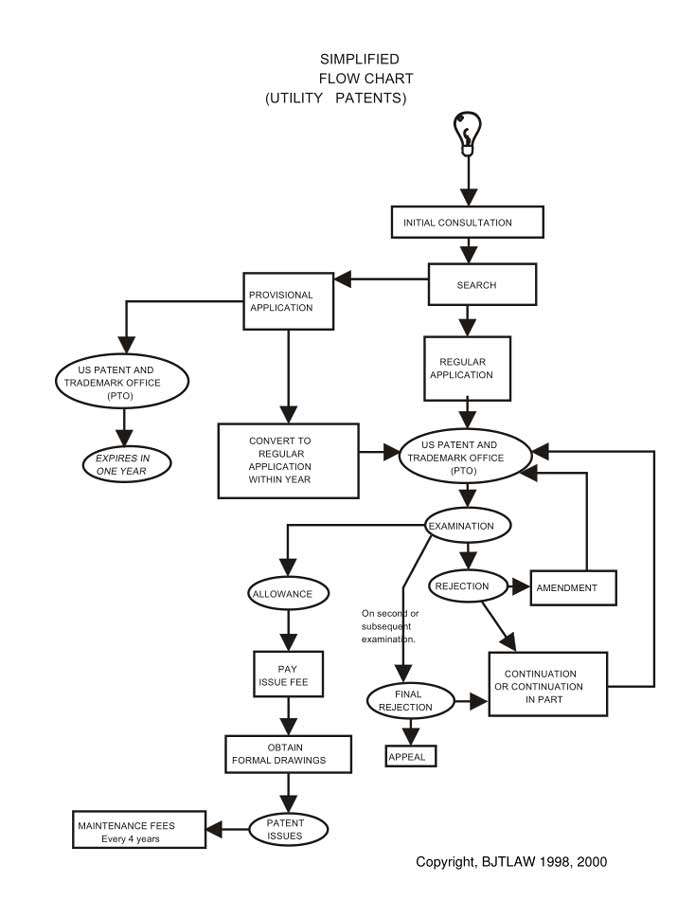
First we conduct a preliminary interview with client. From this the invention disclosure is obtained and the client is counseled as to what the requirements are, what the process is, etc.
Usually, second, we commission a preliminary prior art search and provide a written opinion about whether the invention can be patented.
Then we prepare an application and drawings for the invention. The application and drawings are sent to the inventor for review and comment. Pertinent comments are included and the application and drawings finalized. We prepare the required and e-paperwork, and file the application, drawings, fee and e-paperwork with the USPTO electronically.
In the first Office Action (OA), the USPTO usually rejects some or all of the claims. We receive and review OA and advise the client of the options for responding, the time limits for responding and the risks involved in not responding.
Upon approval from the client we conduct preliminary discussions with the Examiner and draft an official response. The response usually includes amendments to the original claims and arguments. It may also include amendments of the specification and drawings. The response is electronically filed with USPTO and the client is informed.
Sometimes this OA and response cycle must be repeated several times. There are times we need to appeal the Examiner's final rejection to the Appeal Board.
Usually, eventually, we achieve allowance for the client. At this point the issue fee is paid and, if required, formal drawings are prepared and filed. After the patent issues a maintenance fee must be paid every 4 years. The following chart summarized summarizes US Patent Prosecution.
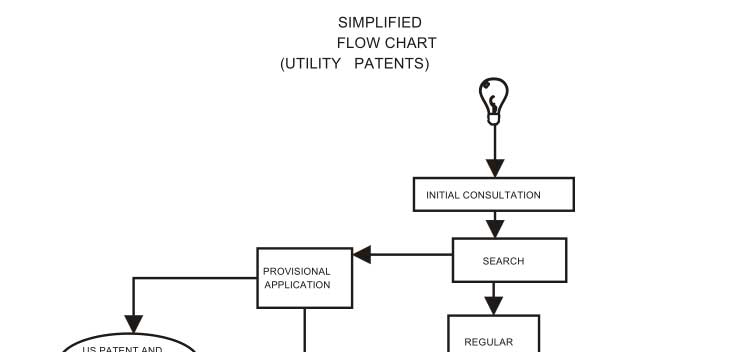
US Utility Patent Prosecution